Stair-climbing wheelchair
I am building a stair-climbing platform with a 4-wheel-drive articulated chassis and soft airless wheels. A driver-assist system allows for easy and safe operation on stairs.
Overview
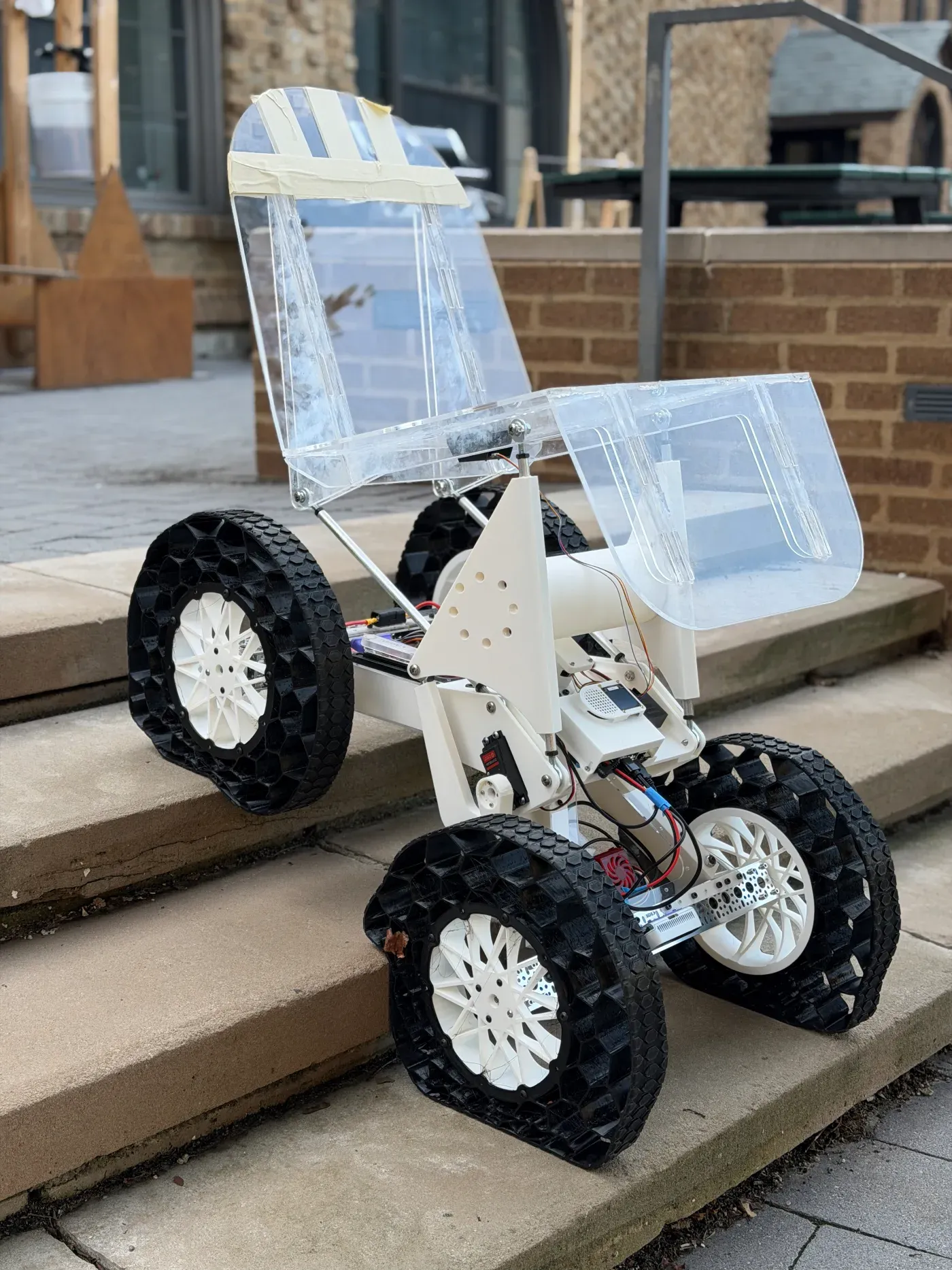
Original full-scale platform
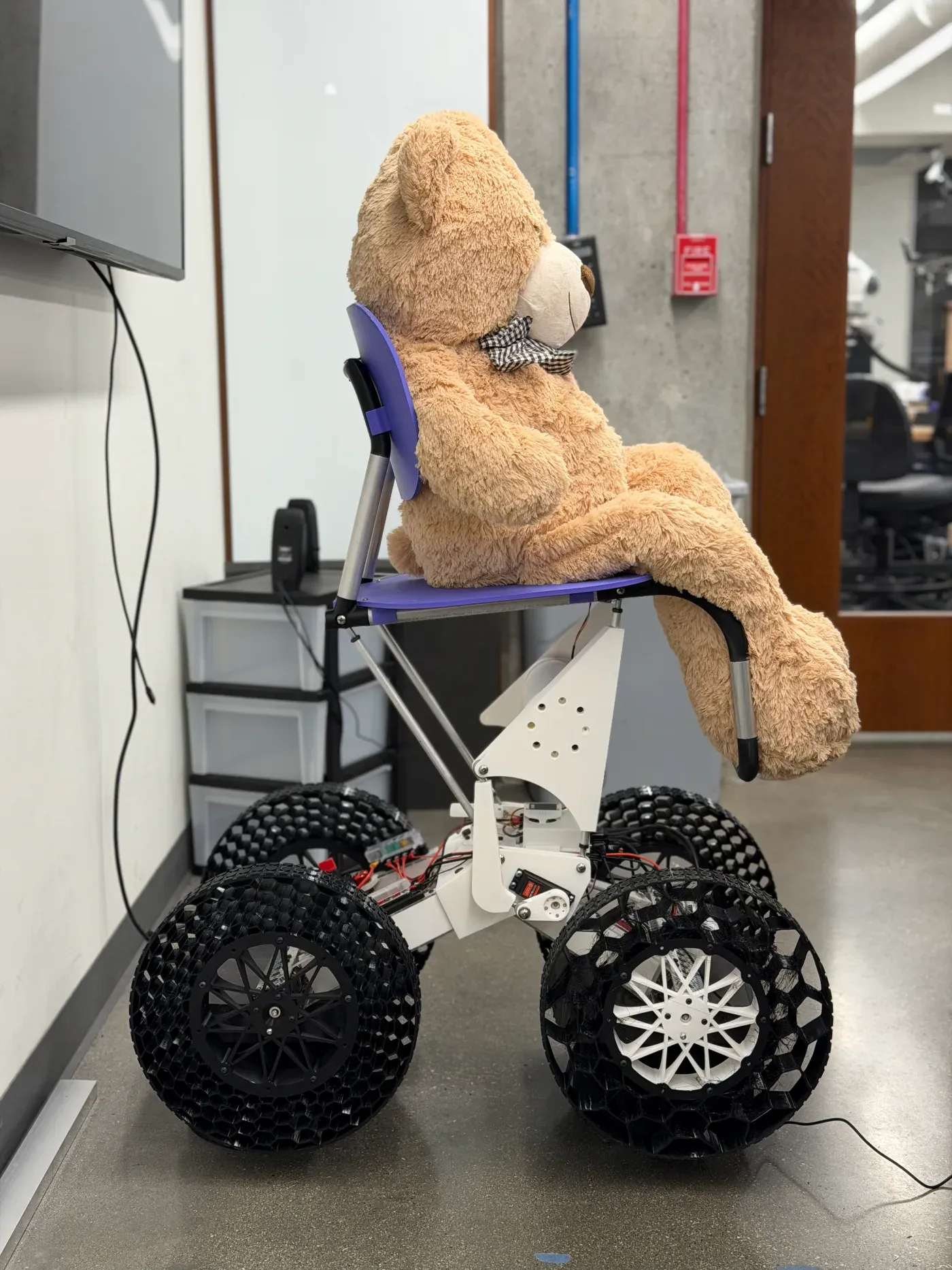
Bob and his upgraded ride (more to come!)
I have been developing a driver-assisted stair-climbing platform (for wheelchairs, and potentially other applications) built around a 4WD articulated chassis with a passive yaw joint. The yaw joint allows the chassis to curve around turning stairs while keeping all four soft airless wheels in contact with the steps. On flat ground, the vehicle can drive in a slipless regime within a 1 m turning radius. Tighter turns (up to pure rotation) are also possible with a hybrid skid-steer mode. All modes are unified under a single control interface for seamless driving.
I built this entire project from scratch. This includes mechanical design, fabrication, ROS 2 software architecture, control systems, and computer vision.
Off-the-shelf components include: onboard computer, motors and motor controllers, camera, IMU, encoders, and electrical components.
Subscale platform
I built a subscale (1/4-scale) platform to validate the kinematics and the articulated-chassis concept.
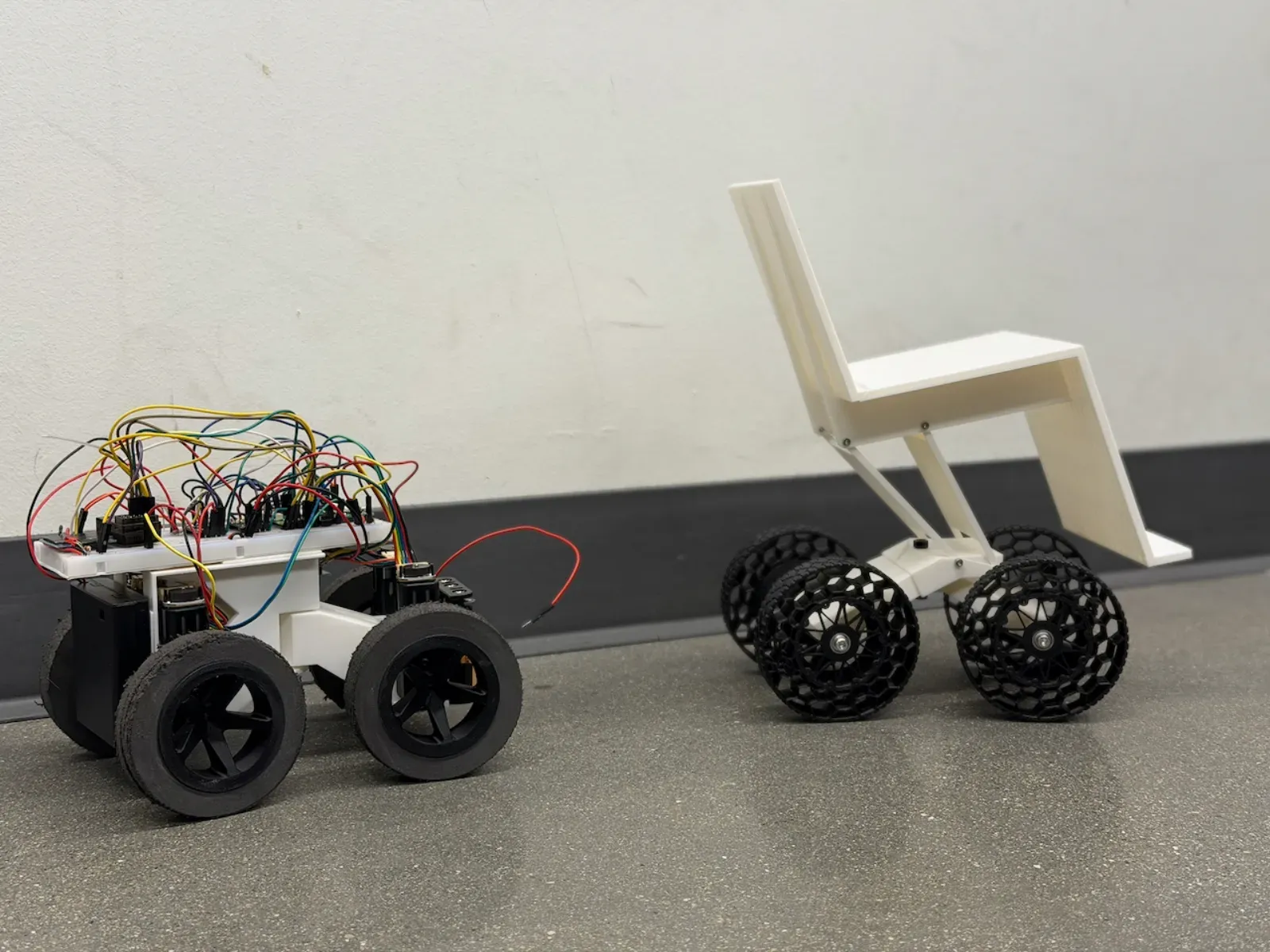
Subscale kinematic demonstrator (left) and concept demonstrator (right)
Closed-loop yaw-joint control
Full-scale platform
Mechanical, electrical and software integration
- kinematics and control systems
- simulation in Gazebo to support development and testing
- user interface
- stair climbing capabilities
Demonstration of the full-scale platform capabilities to climb stairs and maneuver.
Full-scale platform with small wheels
Gazebo simulation and webapp control
Driving up and down the stairs
Close up
Wheelchair integration
- wheelchair mechanism design and optimization
- chair auto-leveling
Demonstration of the wheelchair integration with the platform. The wheelchair is mounted on a self-leveling mechanism that keeps the seat horizontal while climbing or descending stairs.
It’s a wheelchair!
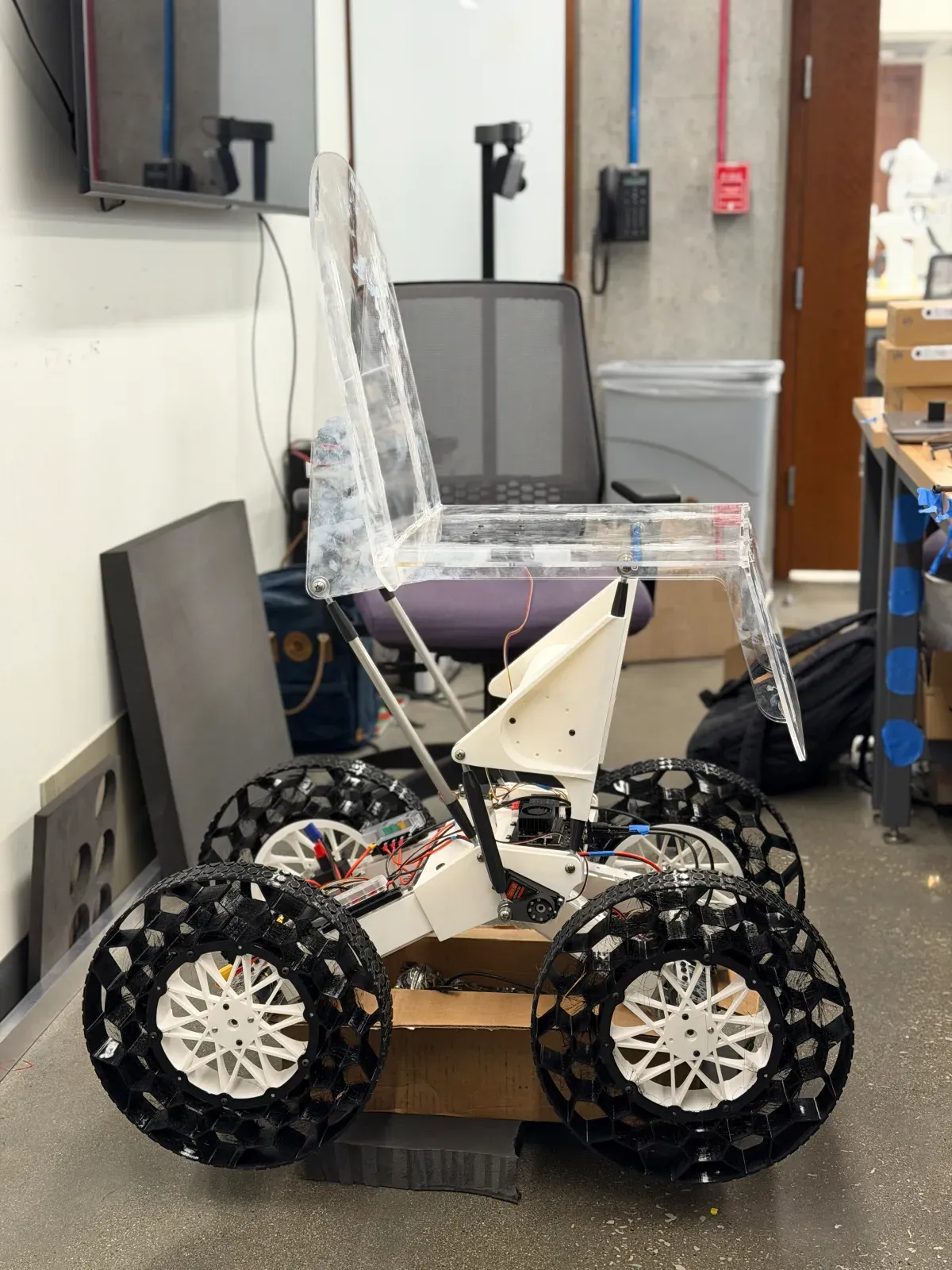
Full-scale wheelchair
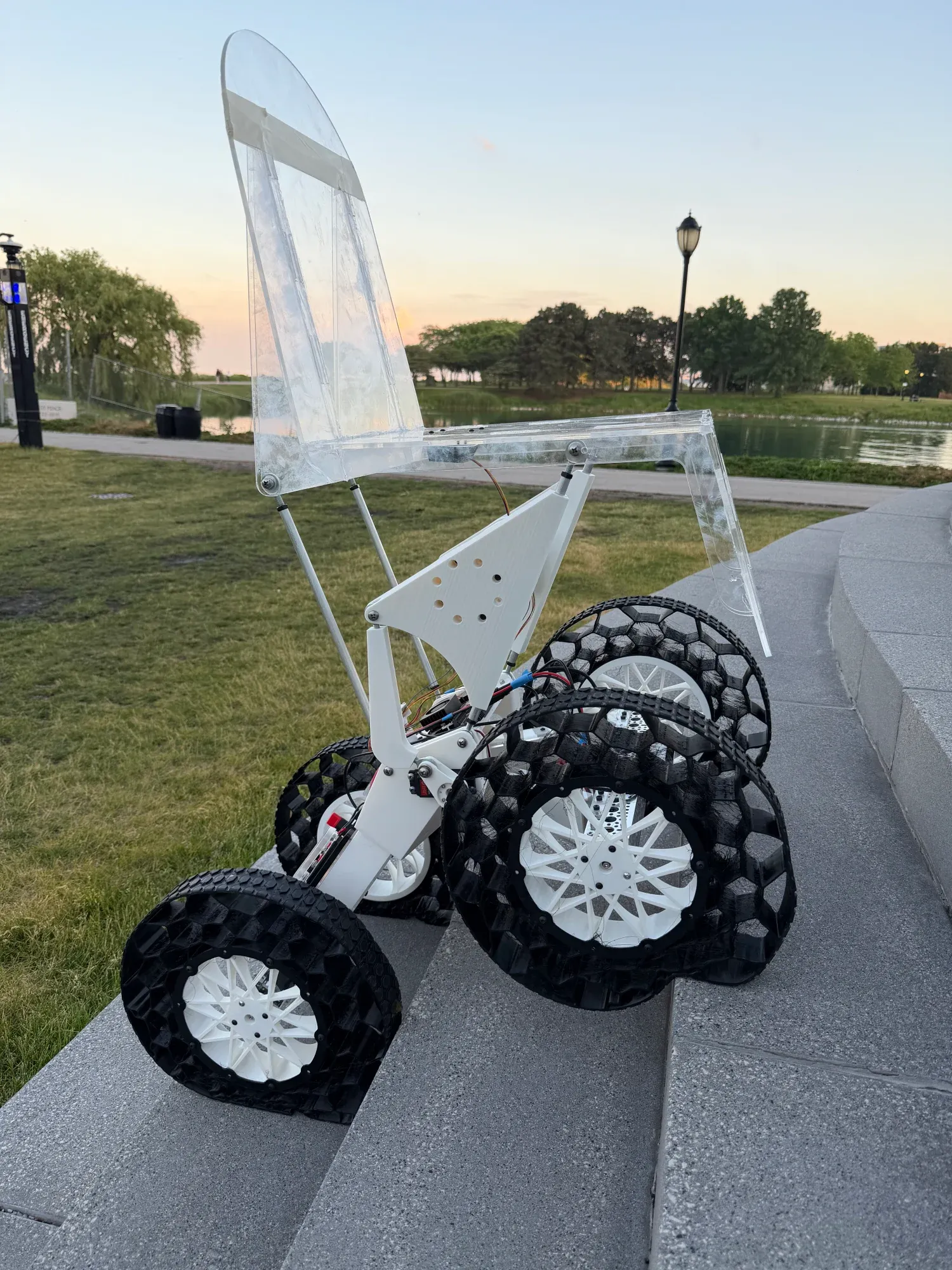
Climbing
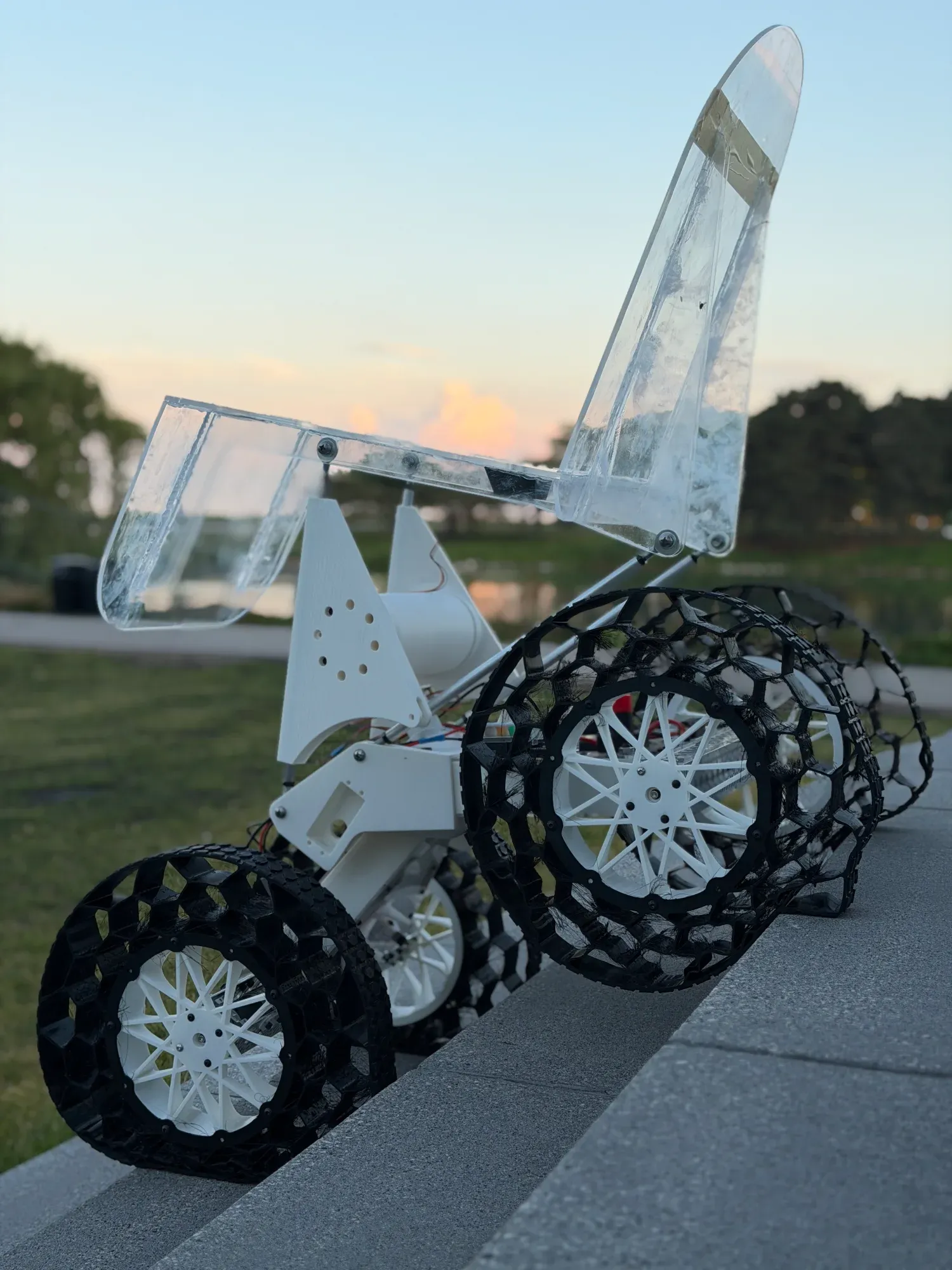
Descending
Climbing up and down the stairs. Seat auto-leveling in development. (8x speed)
Advanced Driver-Assistance System (ADAS)
- classical computer vision for stair detection and collision avoidance
- machine learning for general ADAS features and to improve performance of stair navigation
- the machine learning stack uses YOLO26 trained on the ADE20K dataset for semantic segmentation
The platform can detect stairs, and assist with stair climbing and descending (seat leveling auto-engages and vehicle remains square with the leading step) and avoid collisions with obstacles. Work in progress.
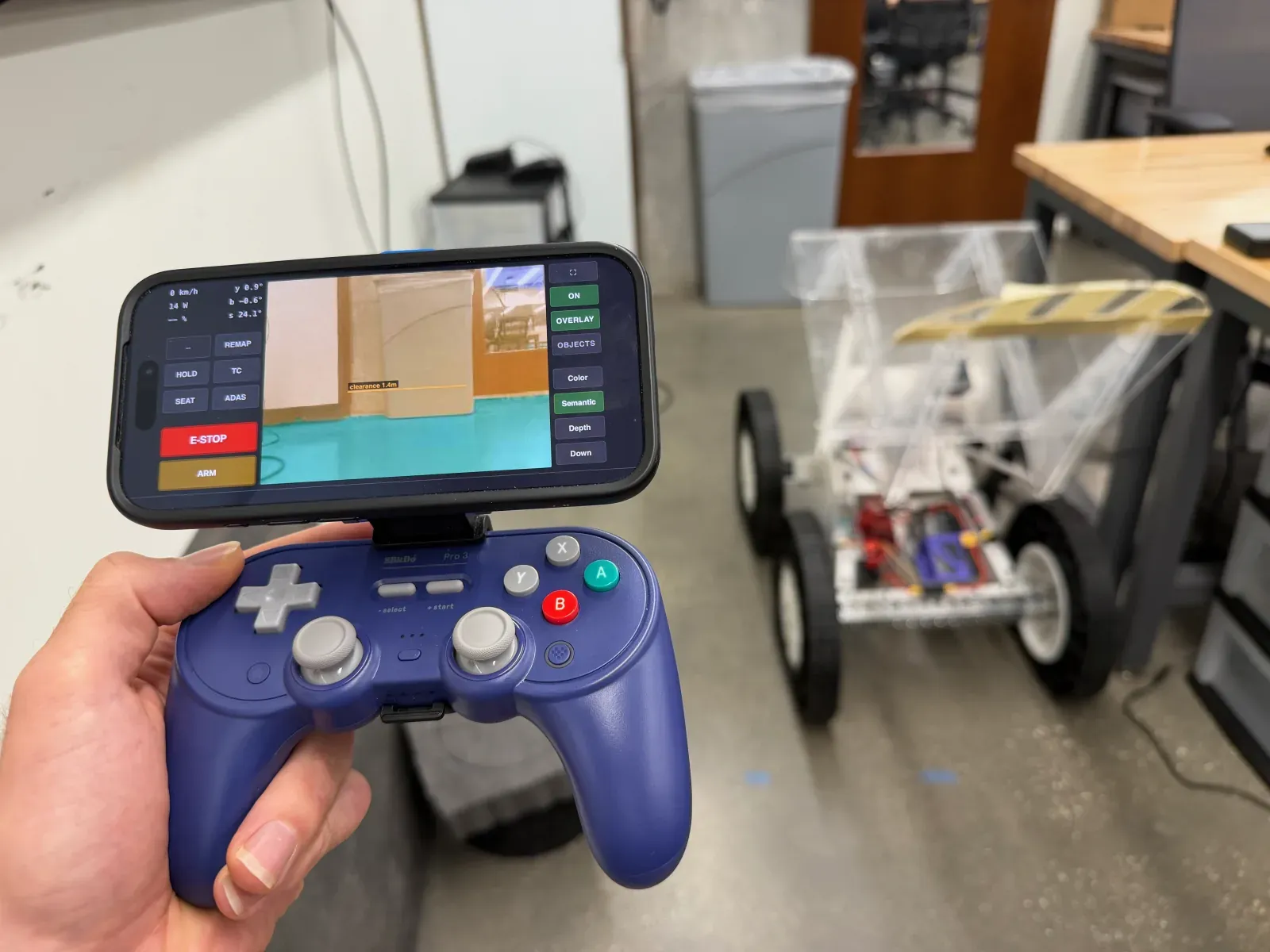
Driver interface: gamepad with phone-mounted webapp
Onboard view. A forward-facing camera is used for collision avoidance and object detection, while a down-facing camera is used for stair navigation.
Hardware upgrades
I am in the process of doing a number of hardware upgrades:
- Wheels: the original wheels had very uneven radial stiffness, which made for a bumpy ride and poor handling. The new wheels have proven to be a significant upgrade for higher speed driving and general smoothness.
- Seat: the original seat was a quick proof of concept, meant to be replaced, which finally happened! Armrests are on the way.
- Linear actuator: the current solution with the rotary actuator has poor rigidity (largely from the gear train). I will be testing a linear actuator to allow for higher overall chair stiffness and a self-locking mechanism, for safety and power efficiency.
- Onboard controls: I am adding a joystick and a small touch screen for full control by the user.
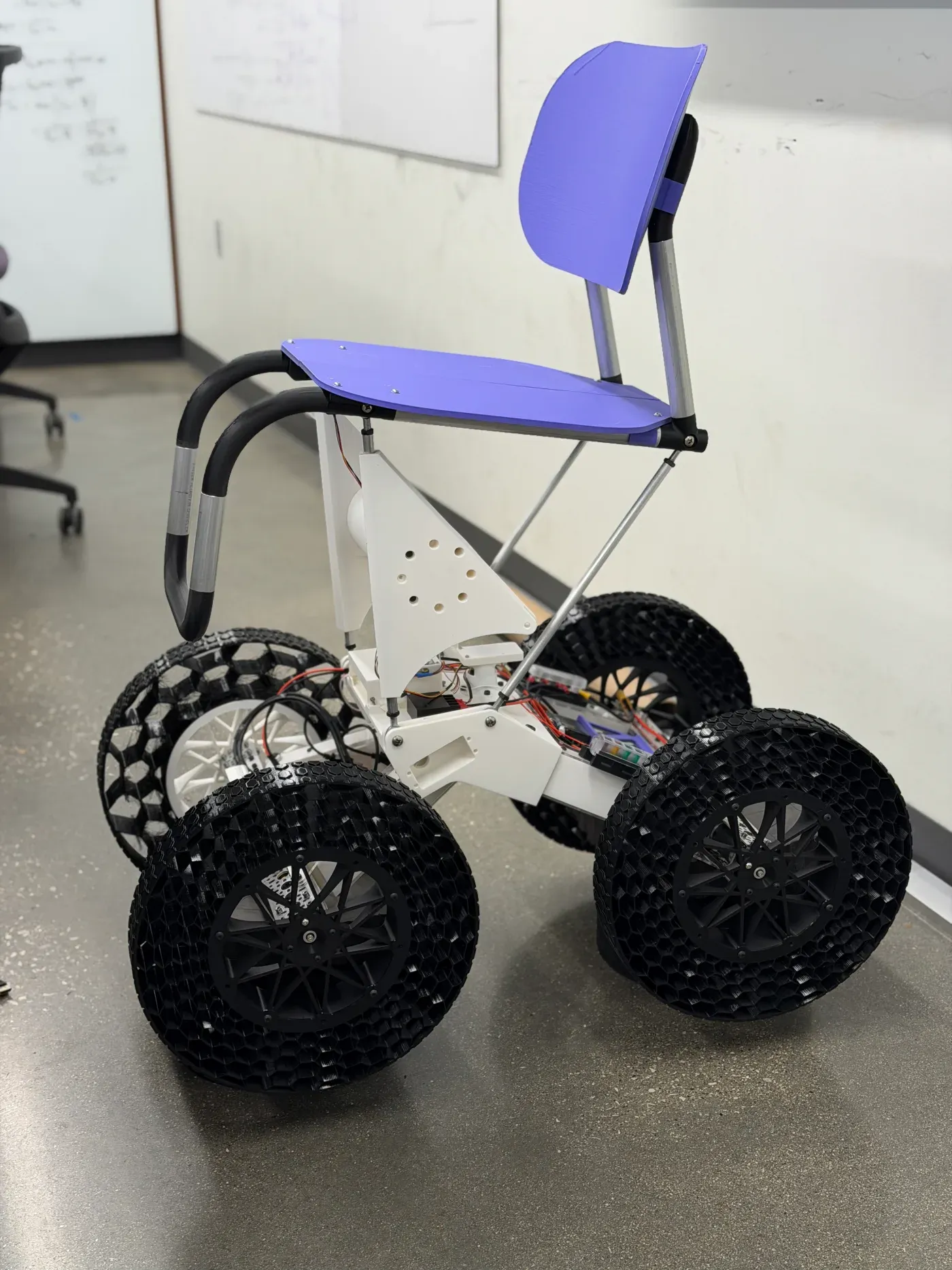
Upgraded seat and wheels
Bob can finally get around on his own